From Banyuwangi or Bali: Sunrise Ijen Volcano Hiking, All Inclusive
Hotel pickupGate fee includedHealth cert included
From $28 per person
This is a working volcano with a working mine on it, climbed in the dark by several hundred people a night. None of that makes it dangerous for a reasonably fit visitor. It does mean there are five things worth knowing before you set off, and every one of them has a straightforward answer.
Sulfur dioxide from the vents is the one genuine hazard on this mountain. In a plume it stings the eyes, catches the throat and sets off coughing, and where it goes depends entirely on the wind. Every fare listed here includes a gas mask or respirator for exactly this reason.
Wear it when your guide says to, not when it starts to hurt. If you are asthmatic, take your inhaler and tell your guide at the start rather than halfway down; several operators say plainly that people with respiratory conditions should not take the crater descent, and the rim is unaffected on most nights.
| What you meet | What it does | What handles it |
|---|---|---|
| Sulfur dioxide at the vents | Stings eyes and throat, provokes coughing | The mask in your fare, worn before you need it |
| A 500 m climb in the dark | Cold legs, fast starts, breathlessness | Set off slowly; ninety minutes is the target, not sixty |
| Loose rock on the crater track | Slips, especially coming back up | Proper shoes, hands free, let loaded miners pass |
| Two-way traffic on a narrow path | Bottlenecks and dazzle from headlamps | Start early, step to the uphill side |
| Cold at 2,386 m before dawn | Shivering while you wait for the light | A warm layer; several operators lend one free |
| Cloud or high gas readings | The crater floor closed on the night | A booking that refunds at 24 hours |
Three kilometres and about 500 metres of ascent is a real climb but not a technical one. The track is wide and graded the whole way, and the people who find it hard are almost always the ones who set off quickly in the cold and then have to stop. Walk the first ten minutes slower than feels natural and the rest arranges itself.
The descent into the crater is the part that asks more of you: about a kilometre of narrow, steep, loose rock with people coming the other way. One traveller measured the whole night at around ten kilometres with that detour included. If you would rather not, the rim view is the better photograph anyway.
You will be walking for ninety minutes in genuine darkness on a mountain with no lighting. Every fare includes a torch or headlamp, and a headlamp beats a torch because it leaves both hands free for the crater track.
Bring your own if you have one. It is the single cheapest upgrade to the night, it does not have to be handed back at the gate, and a spare set of batteries weighs nothing.
The rim suits everyone who can walk three kilometres uphill. The crater floor is a different question, and the honest answer is that anyone with a respiratory condition, significant knee trouble, or a real fear of narrow ground in the dark will enjoy the night more from the top.
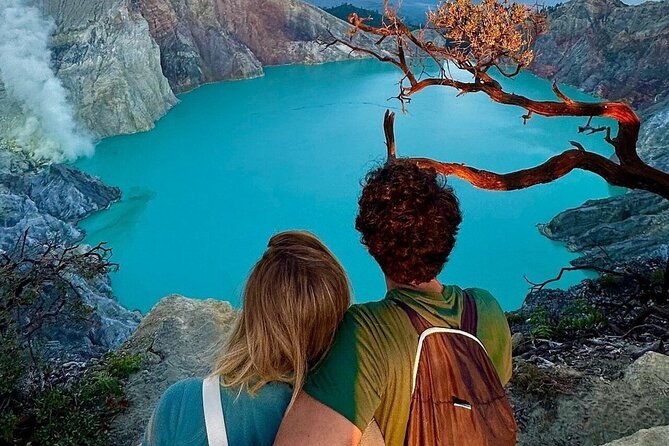
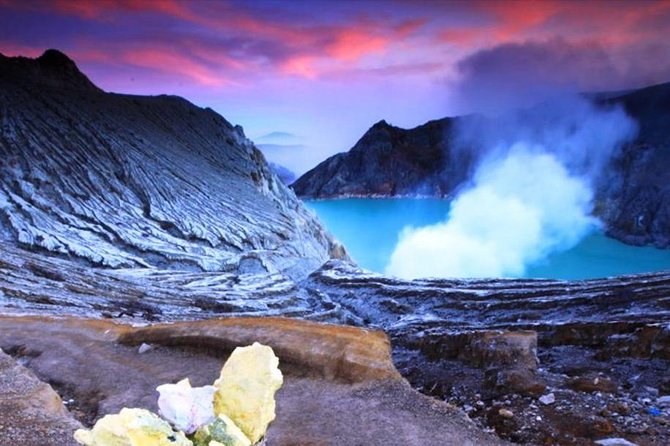
That is not a consolation prize. The rim is where the whole crater, the lake and the line of volcanoes behind you are visible at once, and it is where most of the photographs that made you want to come here were taken.
It is properly cold on the rim before dawn, and it is warm again by the time you reach the gate at eight. That swing catches people who packed for Bali. A fleece or light down layer and a hat are enough, and several operators lend a jacket, gloves and a beanie free of charge if you ask when you book.
Stalls at Paltuding sell gloves and hats to people who did not, at Paltuding prices. It is a small saving and an easy one.
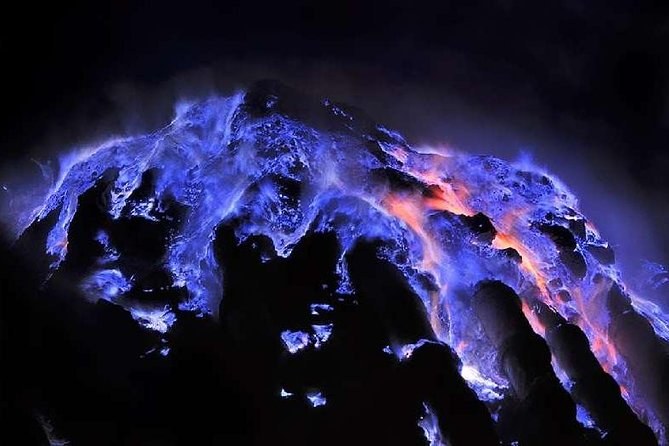
Kawah Ijen shuts for one day in the first week of each month, and the park closes the crater at any time on gas or weather. One traveller's group arrived the day after a two-month closure; another had the entry time pushed back on the night because the gas was heavy where the flames burn.
The way to make that cost you nothing is the cancellation line. Almost every departure listed here refunds in full at 24 hours, so a forecast that turns is an inconvenience rather than a loss. How a night on the mountain works has the timings, and every departure is on Ijen Volcano Tours.
You need one, and every fare here provides one. The vents give off sulfur dioxide that will make you cough and stream at the eyes, and the wind decides how much of it reaches the path. Wear it when your guide says to, not when it starts to hurt.
Three kilometres and about 500 metres of ascent, on a wide track, in the dark. Most people take an hour and a half and every operator here budgets for that. The part that surprises people is the optional descent to the crater floor: a kilometre of narrow, steep, loose rock, and the same again coming back up.
It depends on the operator, and the rules genuinely differ. One sets a minimum age of 15, another 18, and one takes under-tens only under conditions; several simply require an adult with them. One reviewer walked it with a 10-year-old and a 13-year-old who both managed the distance without difficulty.
Yes, and more often than most visitors expect. The crater shuts for one day in the first week of each month, and the park closes it at any time when the gas readings or the weather call for it — one reviewer's group arrived after a two-month closure. Book a departure that refunds at 24 hours and check your date with the operator.
From $28 per person
From $65 per person
From $155 per person