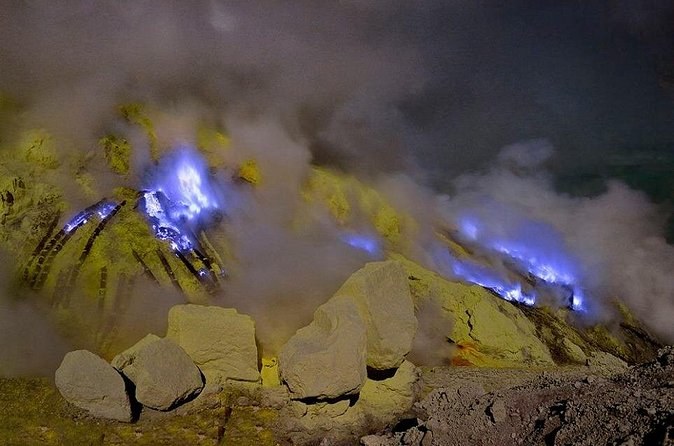
Paltuding: the Start of Every Ijen Volcano Climb
Every climb of this volcano starts in the same car park. Paltuding sits at about 1,850 metres at the end of the mountain road, three kilometres and 500 vertical metres below the crater rim, and almost everything that can go right or wrong with your night happens here before you take a step.
Where Paltuding is
At the top of the road up from Licin, on the Banyuwangi side of the mountain. It is the end of the tarmac and the start of the trail, and the only vehicle access to the crater that ordinary visitors use. From central Banyuwangi it is an hour to an hour and a half by road, depending on how the switchbacks are behaving.
There is a second approach from Bondowoso on the other side, longer and used mostly by people coming from the west. Both are on the map and routes page.
What is there
- The ranger post and ticket window. Where the park's entry fee is paid and where the current rate is posted.
- A car park. Large, unlit at the edges, and full of minibuses between midnight and two.
- Warungs. Small kitchens selling coffee, tea, instant noodles and snacks. Several open through the night for exactly this trade.
- Stalls. Gloves, hats, scarves and masks for people who underestimated the cold, at mountain prices.
- Toilets. Basic, and the last ones before the rim.
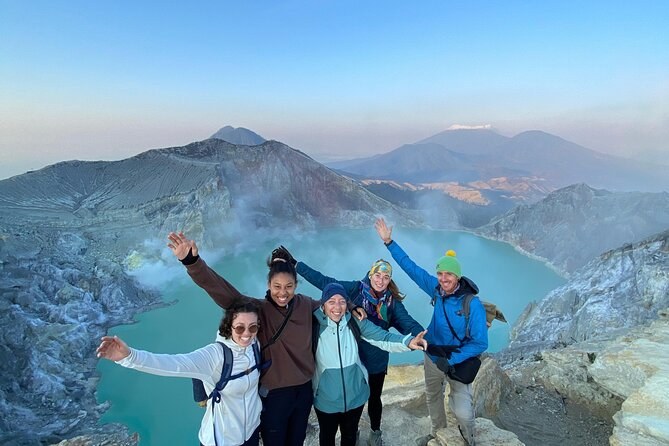
- The trailhead sign. Where every group photograph on this mountain gets taken.
Everything you need for the next four hours has to leave the car park with you.
| At the gate | Above the gate |
|---|---|
| Ranger post and ticket window | Nothing — 3 km of track |
| Car park, unlit at the edges | No lighting of any kind |
| Warungs open through the night | No food or drink for sale |
| Stalls selling gloves, hats and masks | No shelter until the rim |
| Basic toilets | None |
| Patchy phone signal | Do not rely on any |
What is not there
No cash machine, no pharmacy, no shop above the gate and no phone signal you can rely on. Once you walk past the trailhead there is nothing for three kilometres except the track, and nothing at the top except a rim path and a view.
Fill your water bottle and use the toilets before you start. Both pieces of advice sound obvious until you are forty minutes up in the dark.
The gate, and the queue that forms at it
The trail opens for night walkers in the small hours — travellers consistently describe a two o'clock opening — and the vehicles start arriving well before that. Groups gather at the barrier, headlamps go on, and when it opens several hundred people set off within about twenty minutes of each other.
Which part of that wave you are in matters more than how fast you walk. A Ijen tour from Banyuwangi that leaves town at eleven puts you near the front; one that leaves at one puts you in the middle. Reviewers who were early describe standing at the vents; ones who were late describe queueing on the narrow track.
The medical check
A health declaration is required before you can start walking. In practice it is collected on the way up, at a clinic or a checkpoint, and your guide handles the paperwork while you stay in the vehicle. Several fares include the fee; on the others it is a small cash payment.
It is not a physical examination and it does not take long. What it does mean is that turning up at the gate having organised nothing is a slower start than it needs to be, which is one of the practical arguments for booking a guided departure at all.
The trolley taxi
A steel cart on bicycle wheels, pushed from behind and pulled from the front by miners working a second job. It exists for people who cannot walk the trail, and it takes them up and back down the same three kilometres.
It is in nobody's fare and it is negotiated on the spot, at somewhere around fifty to eighty US dollars. Bring the cash in small notes if you think you might want one, because there is nothing at 1,850 metres that takes a card.
Parking, drivers and where everyone waits
Your driver parks and sleeps in the vehicle while you walk. That is the normal shape of the night and it is why the private departures matter: your driver is waiting for your group and nobody else, so you come down when you come down.
On shared departures the vehicle leaves when the group is complete. If you are slower than the rest, say so at the start rather than at the bottom, and the guide will plan around it.
Coming down, and the hour after
The descent takes about an hour and lands you back at the warungs somewhere between seven and nine in the morning. Coffee at that point, after a night on a volcano, is one of the small pleasures of this trip and it costs almost nothing.
Most itineraries then drive you back for a shower, a breakfast or the ferry. The overnight and multi-day trips hold a room for you, which is worth more than it sounds after a 1am start. How the night is timed covers the whole sequence.
Before you leave the car park
Two minutes at the trailhead. Check your headlamp works, that your mask is with you rather than in the van, and that you have water and small notes. The safety page covers what each of those is for, and every departure that supplies them is on Ijen Volcano Tours.
Common questions about the start
What time do the night climbs start?
Between 11pm and 1am, depending on where you are collected. Banyuwangi departures leave town around midnight; the Bali trips wake you at your guesthouse an hour from the gate. The trail itself opens for night walkers around 1 to 2am, and the flames stop being visible as soon as the sky lightens.
Is there anywhere to buy food or water on the mountain?
At the gate, yes; above it, no. Paltuding has warungs selling coffee, noodles and snacks, and small stalls sell gloves and hats to people who underestimated the cold. Once you start walking there is nothing for three kilometres, so fill your bottle before you set off.
What is the trolley taxi, and what does it cost?
It is a wheeled cart pushed and pulled by miners, for anyone who cannot walk the trail under their own power. No fare here includes it and it is negotiated on the spot: one listing puts it at 50 to 80 US dollars. Bring cash if you think you might want one, because there is nothing to pay by card with at 1,850 metres.
What should I wear for a night climb at Ijen?
Proper shoes with grip, long trousers and a warm layer you can take off. It is genuinely cold on the rim before dawn at 2,386 metres and warm again by the time you reach the gate at eight. Several operators lend a jacket, a beanie and gloves free of charge if you ask when you book.
Tours that get you to the gate at the right hour
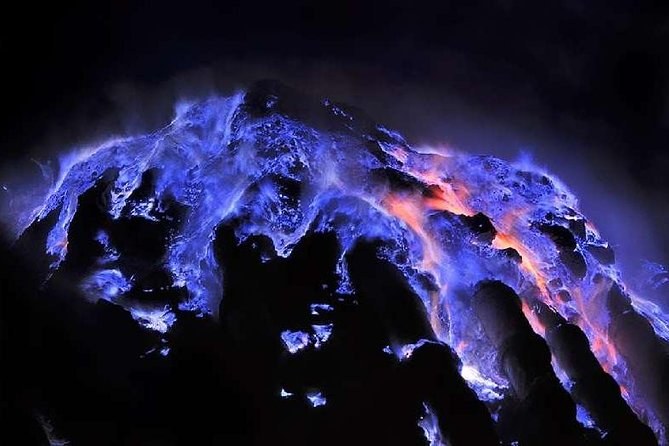
Ijen Crater Private Night Tour from Banyuwangi
PrivateTransport includedGate fee included
From $65 per person