Kawah Ijen in 24 Hours from Bali, with Dinner and a Room
Hotel pickupGate fee includedFerry included
From $101 per person
This is a straightforward climb with a strange set of expectations attached to it. Here are the five that catch people, and what to do about each.
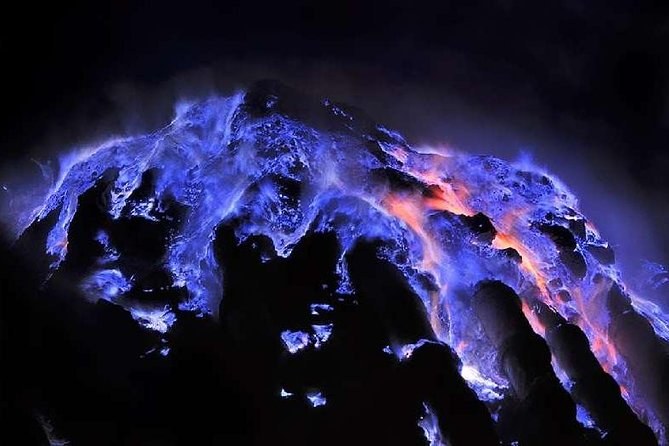
They are not, and no honest operator says otherwise. The flames depend on the vents, the wind, the cloud and the gas readings, and the park closes the crater floor whenever those go the wrong way. Three operators posted notices during 2026 that they were temporarily not showing.
What to do: book a departure that refunds in full at 24 hours, ask the operator what the crater has done that week, and go for the sunrise with the flames as the bonus. Why they are never promised is worth five minutes before you pay.
You are not. The trail tops out on the crater rim at about 2,386 metres and stops there by design. The highest point of the complex, Gunung Merapi at roughly 2,799 metres, is a separate peak that nothing here climbs.
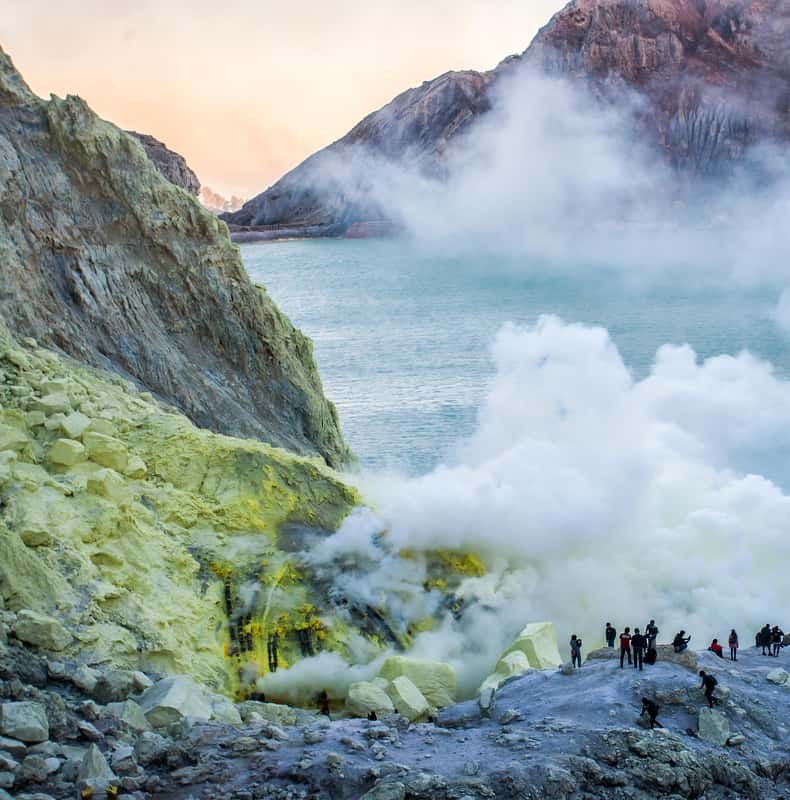
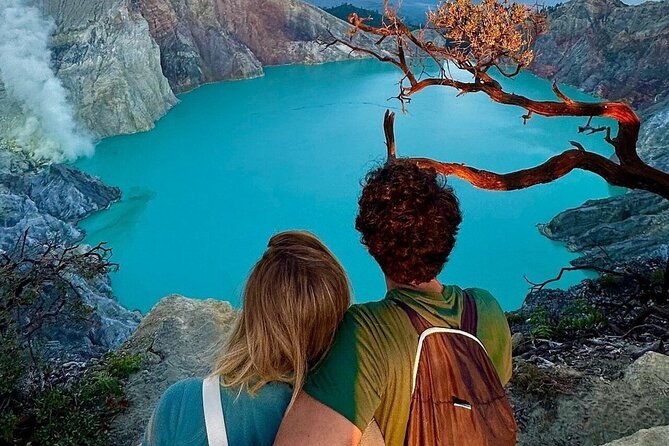
What to do: reset the picture. The reward is a hole in a mountain with a kilometre of turquoise acid in it, not a peak. The lake is what you have come to stand over.
It is not. Sulfur dioxide from the vents stings the eyes and catches the throat, and where it goes depends entirely on the wind. Every fare listed here includes a mask for exactly this reason.
What to do: carry it on the trail rather than leaving it in the van, and put it on when your guide says to rather than when it starts to hurt. If you are asthmatic, say so at the start and consider staying on the rim — the safety page sets out where that line sits.
It is properly cold on the rim before dawn at 2,386 metres, especially with wind on it, and warm again by the time you reach the gate at eight in the morning. That swing catches almost everyone arriving from a beach.
What to do: a fleece or light down layer, a hat and gloves. Several operators lend a jacket, gloves and a beanie free of charge if you ask when you book, and the stalls at the gate sell them to people who did not, at gate prices.
Three kilometres and 500 metres of ascent on a wide graded track is a real climb, but it is not the part people find difficult. The descent to the vents is: about a kilometre of narrow, steep, loose rock, with traffic in both directions, and the same again coming back.
What to do: decide in advance whether you are going down, and tell your guide at the start rather than at the top. The rim is the better photograph either way.
Every departure here is built to roughly this shape.
| Time | Where you are | What is happening |
|---|---|---|
| 23:00–00:30 | Collected from your hotel or the port | Health declaration handled on the way |
| 01:00–02:00 | Paltuding car park | Waiting at the barrier in the cold |
| 02:00–03:30 | On the trail | Ninety minutes up in the dark |
| 03:30–04:30 | The rim, then the descent | The flames, if the vents allow |
| 05:00–06:00 | Back on the rim | Sunrise over the acid lake |
| 07:00–09:00 | Down at the gate | Coffee, then the drive back |
In July and August several hundred people set off within twenty minutes of each other, and the narrow section down to the vents carries traffic in both directions. That is not a reason to avoid those months — they are also the clearest — but it is a reason to care about the hour your departure leaves town.
In February the same trail can be almost empty, with a real chance of cloud instead. The trade is a genuine one and the month-by-month page sets out both sides of it.
The night climbs feed you water, coffee and in one case fried banana, which is the right amount of food for a 1am start. The overnight and 24-hour trips include a dinner before you sleep and a breakfast after you come down, and several hold a room and a shower for you at the end.
Plan the day after gently. You will have been awake since midnight, walked ten kilometres and breathed a certain amount of sulfur, and the sensible plan is a shower, a long breakfast and nothing ambitious. What else is nearby works better on day two than on the same morning.
The rules genuinely differ by operator, which is unusual and worth checking rather than assuming. One listing sets a minimum age of 15, another 18, and one takes under-tens only under conditions; several simply require an adult alongside. One reviewer walked the whole route with a ten-year-old and a thirteen-year-old who both managed the distance comfortably.
For anyone who cannot manage three kilometres uphill, the trolley taxi exists and runs at fifty to eighty dollars, negotiated at the gate in cash. It is not in anybody's fare and it is not a comfortable ride, but it is the difference between coming and not coming. How it works at Paltuding covers the practicalities.
The two things worth photographing here need opposite settings and happen ninety minutes apart. The flames want a tripod, a long exposure and a lens you are willing to expose to sulfur. The lake at first light wants none of that and works on a phone.
If you are carrying a camera down to the vents, carry it in something sealed and expect to clean it afterwards. If you are not, you lose nothing that matters: the photograph most people come home with is the crater from the rim as the sun arrives, and that one is easy. The gallery is mostly rim shots for exactly that reason.
All of them are on None, side by side. Bali against Banyuwangi is the comparison most first-timers actually need, and the questions page covers the rest.
Get the expectations right and this becomes one of the best nights of a trip to Java. Get them wrong and it is a cold queue. Every departure is on Ijen Volcano Tours.
From $101 per person
From $28 per person
From $65 per person