Kawah Ijen in 24 Hours from Bali, with Dinner and a Room
Hotel pickupGate fee includedFerry included
From $101 per person
Four things move the answer here, and only one of them is the season. The month decides the cloud, the moon decides the contrast, the day of the month decides whether the mountain is open at all, and the hour decides whether you are at the front of the trail.
September, on balance. It sits at the end of the dry season, so the nights are still reliably clear, and the crowds have thinned after the first week. Late April is the other answer: the rain has eased, the track has dried out and the peak-season prices have not arrived.
July and August have the most reliable conditions and the largest crowds by a wide margin. February and March have the fewest people and the highest chance of standing in cloud. Everything else is somewhere between.
More than it would on most mountains, because rain here does not just make you wet. It puts cloud in the crater, which hides the flames and the lake; it makes the descent to the vents loose and greasy; and it raises the chance of the park closing the crater floor for the night.
None of that means the wet season is unbookable. It means a flexible date is worth more between November and March than at any other time. The month-by-month page has the detail.
Yes, and almost nobody mentions it. The flames are faint to begin with, and a full moon lifts the ambient light enough to wash them out further. If your dates are flexible, pick the week around a new moon.
It costs nothing and it is the cheapest improvement available to a night on this mountain. It matters more in the dry season, when the sky is clear enough for the moon to do its work.
One day in the first week of every month, for a local ceremony. On top of that the park closes the crater floor whenever the gas readings rise, and the whole trail when the weather makes it unsafe. One traveller's group arrived the day after a two-month closure.
Check your date with the operator the week before, and book something that refunds in full at 24 hours. That combination costs nothing and removes almost all of the risk.
The mountain is climbable in every month of the year. What changes is the odds.
| Months | Conditions | Crowds | What to weigh |
|---|---|---|---|
| January–February | Wet, cloud in the crater most mornings | Lowest of the year | Lowest prices; keep the date flexible |
| March–April | Drying out through the period, clearer mornings | Low | Late April is the value pick of the year |
| May–June | Dry, clear, cold on the rim | Building | Reliable conditions before the peak arrives |
| July–August | The clearest nights of the year | Peak, by a wide margin | Book a week ahead; be early on the trail |
| September–October | Still dry, thinning out | Moderate | The best balance of conditions and company |
| November–December | The wet season returns, closures reappear | Mixed | Some operators stop taking bookings over the holidays |
Walking by two, on the rim by half past three. That gives you the flames while it is still properly dark and puts you in position for the light an hour and a half later. Departures that leave Banyuwangi at eleven give you the most margin.
Being early beats being fast. Travellers who set off in the first wave describe standing at the vents; ones who arrived mid-queue describe a bottleneck on a narrow track. The hour-by-hour guide lays the whole night out.
A little, and in the direction you would expect. Dry-season grit holds well underfoot and the crater track, while steep, is predictable. After rain the same track is greasy and the descent to the vents becomes a genuinely different proposition, which is why operators are quicker to keep groups on the rim between November and March.
The climb to the rim is unaffected in any month. It is wide, graded and busy whatever the weather has been doing, and the only thing rain changes on that section is how wet you are when you get there. What the ground is like underfoot covers both.
Midweek, marginally, for two reasons. The park's entry costs less on a weekday than at a weekend, and Indonesian domestic visitors weight the weekend heavily, which shows on the trail during school holidays.
Against that, nothing about the mountain itself changes. If a weekend is what you have, take it and go early.
Perfectly possible, and one traveller describes doing exactly that with a private guide and having the crater almost to themselves. You lose the flames, which need darkness, and you keep the lake, the crater wall and a walk without a queue on it.
It is a genuine option for anyone who cares more about the landscape than the phenomenon, and it turns a punishing night into an ordinary morning walk.
Indonesian domestic travel peaks around the June and July school break and again over the end-of-year holidays, and both show on this trail. It is a different crowd from the international one — larger groups, more families, and a heavier weekend skew — and it lands on top of the dry-season peak rather than instead of it.
The practical effect is the same as any other busy night: leave town earlier. Nothing about the mountain changes, and the queue at the narrow descent is the only place you will notice it. What the gate looks like on a busy night covers the shape of it.
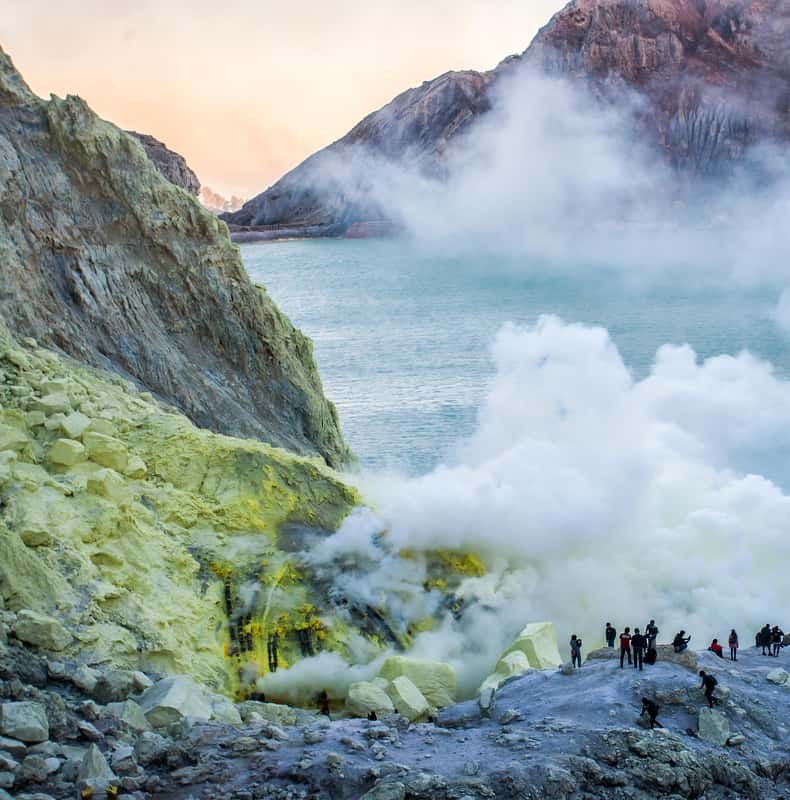
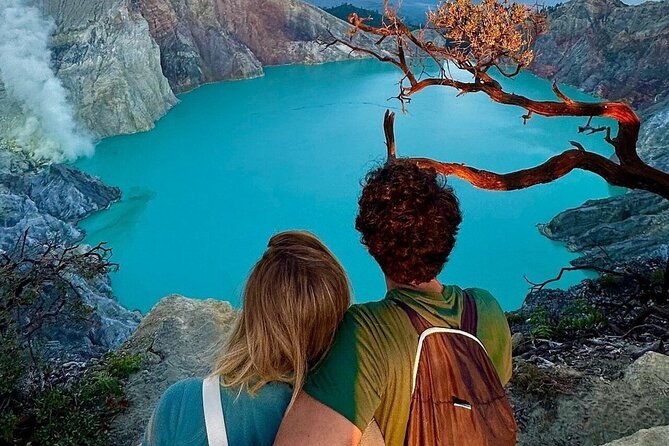
Not the lake itself, which holds its colour year round because the chemistry that makes it turquoise does not wash out with the rains. What changes is whether you can see it. Cloud sits in the crater far more often between November and March, and a clouded crater is a grey bowl rather than the photograph you came for.
The crater wall is the other thing worth timing. In the first hour of light the banded yellow, orange and grey of the inner wall carry more colour than the water does, and that needs clear air rather than a particular month. What the lake is made of covers why the colour holds.
Enormously, and it is the variable most people underestimate. In July and August several hundred people set off within twenty minutes of each other and the narrow descent to the vents carries two-way traffic the whole way. In February the same trail can be almost empty.
That is the real argument for September and late April. You keep most of the dry-season odds and lose most of the queue, which on this mountain is worth more than a few dollars of fare difference. If you must travel in peak season, the answer is a departure that leaves town early rather than a more expensive one.
Two or three days outside July and August; a week inside them, when accommodation in Banyuwangi fills as well. In the wet season you can book almost on the day, and the useful strategy there is to wait for a forecast rather than to commit early.
Whatever month you settle on, the fares are the same and the mountain is the same. Every departure is listed on Mt Ijen tour, and the decision guide covers which one suits your side of the strait.
Once the month is settled, the rest is which side of the strait you start from, and every option is on Ijen Volcano Tours.
May to September, with September and late April the sweet spots for having the conditions without the crowd. July and August are the clearest and the busiest by a wide margin.
Yes, and plenty of people do. Expect cloud in the crater on many mornings, a greasier track and a higher chance of the crater floor being closed. Keep the date flexible and book a fare that refunds at 24 hours.
For the flames, yes. They are faint, and a full moon lifts the ambient light enough to wash them out. If your dates move, pick the week around a new moon; it costs nothing.
One day in the first week of every month, for a local ceremony, and at any time on gas or weather. Confirm your date with the operator the week before you travel.
January and February, when the crowds are lowest and accommodation in Banyuwangi is easiest to find. The tour fares themselves move very little across the year; what changes is availability.
From $101 per person
From $28 per person
From $282 per person